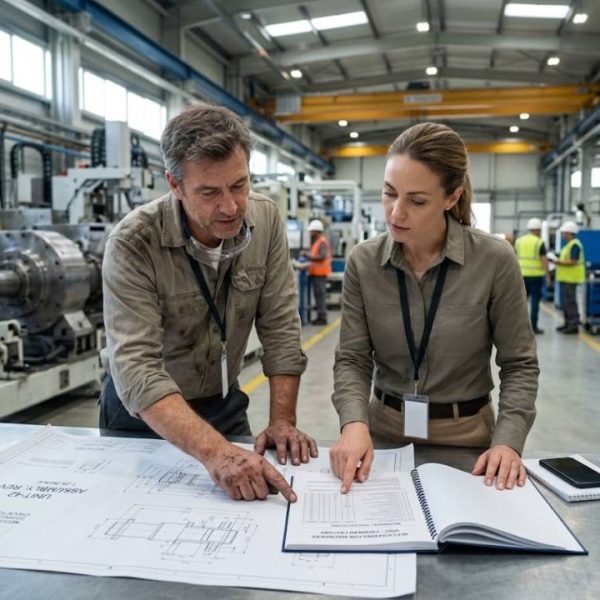
Germany remains Europe's manufacturing powerhouse, and for companies importing precision machinery, automotive components, or industrial equipment from German suppliers, documentation accuracy is not optional. A single mistranslated tolerance specification or safety warning can halt a production line or trigger a costly recall, which is why manufacturers increasingly treat translation as an engineering discipline rather than an afterthought.
Technical Documentation Is Not General Translation
Engineering drawings, quality control manuals, and compliance certificates from German suppliers use a dense, standardized vocabulary that general-purpose linguists rarely master. A translator working across German to English translation services for industrial clients needs familiarity with DIN standards, ISO terminology, and the specific conventions German engineers use when documenting tolerances and material specifications.
Companies that hand this work to generalist freelancers often discover errors only after parts fail to meet spec on the shop floor, by which point the cost of the mistake has multiplied far beyond what a specialized translator would have charged.
Compliance Paperwork And Regulatory Risk
Importing machinery into North America or other regulated markets typically requires certified translations of conformity declarations, safety data sheets, and inspection reports. Regulatory bodies expect these documents to match the source exactly, and any ambiguity can delay customs clearance or trigger additional inspections that push back entire project timelines.
Contracts And Supplier Agreements
Beyond technical files, the commercial side of German supplier relationships depends on accurately translated purchase agreements, warranty terms, and liability clauses. German contract law includes concepts that do not map neatly onto common law systems, so a literal word-for-word rendering can quietly shift risk in ways neither party intended.
Procurement teams that invest in proper legal translation upfront avoid the far more expensive scenario of disputing contract interpretation after a shipment has already gone wrong.
Product Localization For The German Market
The relationship runs both directions: companies exporting into Germany need their own product manuals, packaging, and marketing materials adapted for German-speaking engineers and end users. This is where certified german translation services matter most, since German regulators and business partners often require officially certified documents before accepting foreign products into distribution channels.
Certification requirements vary by document type and destination, and suppliers who assume one certified translation covers every use case frequently find themselves paying twice to redo work that should have been scoped correctly from the start.
Software And Interface Localization
Industrial equipment increasingly ships with embedded software interfaces, diagnostic tools, and digital manuals that also require localization. Translating a control panel interface demands close collaboration between linguists and engineers, since a mistranslated menu label on machinery can lead an operator to trigger the wrong function entirely.
Training Materials And Technical Support
When German-made equipment is installed at a foreign facility, training documentation and support call scripts need translation that preserves precise technical meaning while remaining clear to operators who are not engineers themselves. This balance between technical accuracy and plain-language clarity is one of the harder skills in industrial translation, and it separates experienced technical translators from those simply fluent in both languages.
Supply chains running through Germany almost always run through Poland as well, and the paperwork follows them. Precision in contract translation is what stops a supplier agreement from meaning two subtly different things in two jurisdictions. There is a handful of documents no company should carry across that border untranslated.
For the Polish leg of these supply chains, the same discipline applies: contracts, compliance certificates, and training materials all need precise Polish versions, not just German ones. Dependable business translation services keep documentation consistent across every language in the chain, so a supplier agreement means exactly the same thing in every jurisdiction. Companies that get the Polish paperwork right avoid the same costly border delays and disputes they work so hard to prevent on the German side.
Building A Reliable Translation Workflow
Companies that work regularly with German suppliers benefit from establishing a standing relationship with a translation provider rather than sourcing project by project. A consistent provider builds a terminology glossary specific to the client's products over time, which reduces both cost and error rates on every subsequent project.
This is particularly valuable for firms that rely on ongoing german translation services across multiple product lines, since terminology consistency across a whole catalog matters as much as accuracy within a single document.
Choosing Between Machine And Human Translation
Machine translation has improved dramatically for casual content, but industrial documentation remains a poor fit for fully automated tools. A safety warning or a torque specification translated incorrectly by an algorithm rarely looks obviously wrong to someone unfamiliar with the source language, which makes automated errors in technical contexts especially dangerous compared to more visible mistakes in marketing copy.
Many manufacturers now use machine translation as a first-pass draft for high-volume internal documents, reserving certified human review for anything customer-facing, safety-critical, or legally binding. This hybrid approach can control costs without exposing the business to the risks of relying on unedited machine output for documents that matter most.
Resources For Importers And Manufacturers
The German Chambers of Commerce Abroad network offers guidance on trade documentation requirements, while the Germany Trade and Invest agency publishes detailed sector information for companies navigating German industrial supply chains. Working with a specialized provider such as German translation services built for technical and regulatory documents helps manufacturers avoid the compliance and communication gaps that generic translation tools consistently miss.
Getting The Details Right
Industrial partnerships with German suppliers succeed or stall on the strength of their documentation, not just their engineering. Companies that treat translation quality as part of their supply chain risk management, rather than a line item to minimize, consistently avoid the delays and disputes that plague those who cut corners on this work.